

Roadside assistance is worth it in 2026 when you need help with a breakdown and your existing coverage does not meet that need. It is not worth adding another plan that duplicates usable benefits you already have. Check towing restrictions, covered incidents and service-area rules before choosing between ongoing coverage and on-demand help.
- Is roadside assistance worth it? Yes, when it fills a genuine gap in your breakdown coverage.
- Check existing roadside assistance benefits before adding a membership or insurance add-on.
- Compare towing restrictions and service areas, not just the list of covered incidents.
- Roadally connects drivers in Canada and the US with verified local providers through an app-based platform.
Is roadside assistance worth it in 2026?
Roadside assistance is worth having when you cannot safely resolve a breakdown yourself or arrange suitable help. The decision is not simply whether your vehicle is reliable. It is whether you have a workable response to a flat tire, a dead battery, a lockout or a vehicle that needs towing.
Start with the help you already have. Then compare how each arrangement handles your driving needs. The table below separates the main choices without treating any one arrangement as the right answer for every driver.
| Arrangement | Best for | Main advantage | Main limitation to check |
|---|---|---|---|
| Existing roadside benefits | Drivers whose current benefits cover their needs | Uses coverage you already hold | Eligibility, incident limits and service-area exclusions |
| Separate ongoing coverage | Drivers who want a defined arrangement before a breakdown | Establishes a contact and benefit terms in advance | Overlap with existing benefits and towing restrictions |
| On-demand roadside help | Drivers who want to request help for a specific incident | Lets you seek assistance when a problem happens | Local service coverage and the details of the requested work |
Keep useful existing coverage; add help only where there is a real gap. A benefit that excludes your usual driving area or does not handle the assistance you need is not a complete solution.
Why this matters
Roadside assistance is a way to arrange help, not a guarantee that every vehicle problem will be fixed beside the road. A jump start, tire change or lockout service addresses a particular situation. A mechanical fault can still require towing and repair.
In 2026, compare the arrangement you would actually use during a breakdown, not the longest service list. You need a clear request process, appropriate help and terms that fit your journeys.
For an app-based option, Roadally connects drivers in Canada and the US with verified local service providers for emergency roadside assistance. Its listed services include jump starts, tire changes, towing and lockouts; assess the requested service and your location before relying on any arrangement.
Existing roadside benefits: check them first
Before choosing separate coverage, review your vehicle documents, insurance policy and any membership benefits you hold. Look specifically for roadside assistance. Do not assume a general vehicle warranty, insurance policy or membership includes the help you need.
Check who receives the benefit. Coverage tied to a named vehicle is different from coverage tied to a person. That distinction matters when you drive a borrowed vehicle, share vehicles within your household or travel as a passenger.
Also check how you must request help. If the terms require a particular contact channel or prior authorisation, save those instructions somewhere accessible. Existing roadside benefits are best for drivers whose current terms match their vehicles and journeys. Their advantage is avoiding duplication; their limitation is whatever the agreement excludes.
Separate ongoing coverage: define the gap it fills
Separate coverage makes sense when existing benefits leave a specific need unresolved. That need might concern towing, the vehicle you drive, the places you travel or which household members can request assistance.
Read the service definitions rather than relying on the word included. A tire-change benefit and replacement of a damaged tire are different tasks. Likewise, arranging a tow does not mean the subsequent repair is part of roadside assistance.
Separate ongoing coverage is best for drivers who want a defined assistance arrangement before trouble occurs. Its strength is having a process established in advance. Its weakness is duplication when another benefit already handles the same incidents under suitable terms.
On-demand help: assess the incident before requesting service
On-demand roadside assistance is an alternative way to seek help for a specific problem. It suits a driver who wants to request assistance at the time of an incident rather than assume an existing benefit applies.
Describe what you can observe: the vehicle will not start, a tire is flat, the keys are inaccessible or the vehicle cannot move safely. You do not need to diagnose a mechanical fault to explain the symptoms. An accurate description helps distinguish a request for roadside work from a request for towing.
On-demand help is best for drivers seeking assistance for a particular incident. Its advantage is an incident-specific request. Its limitation is that you still need to confirm the service fits your location and vehicle; a general service description is not confirmation that a particular request can be fulfilled.
Why roadside assistance value varies
For a 2026 decision, focus on the conditions that change whether help is useful to you:
- Existing benefits: An additional arrangement adds little if it repeats coverage you can already use.
- Driving area: Service-area restrictions matter when you travel outside your usual routes, including across the Canada–US border.
- Vehicle requirements: Check whether assistance applies to your vehicle and whether towing requires particular equipment.
- Towing terms: Review destination rules and any distance or incident limits in the agreement.
- Practical alternatives: Your ability to handle a tire problem safely or contact suitable local help changes the gap assistance fills.
Do not confuse vehicle maintenance with a breakdown response. Maintenance addresses vehicle care; roadside assistance addresses an incident. Neither replaces the other.
How do you decide whether to get roadside assistance?
Use this sequence to make your 2026 choice. The goal is a usable response to a breakdown, not another benefit you cannot explain.
- Check coverage. Find the roadside terms in your existing agreements. Record the eligible vehicle or person, contact method and main exclusions.
- Map journeys. Consider your usual routes and any planned travel outside them. Check service areas rather than assuming cross-border coverage.
- Identify gaps. Match your needs against the listed services. Separate roadside work from towing and subsequent repairs.
- Compare help. Assess whether existing benefits, separate coverage or on-demand assistance fills the gap without unnecessary overlap.
- Save instructions. Keep the request process accessible and share it with anyone who drives the vehicle.
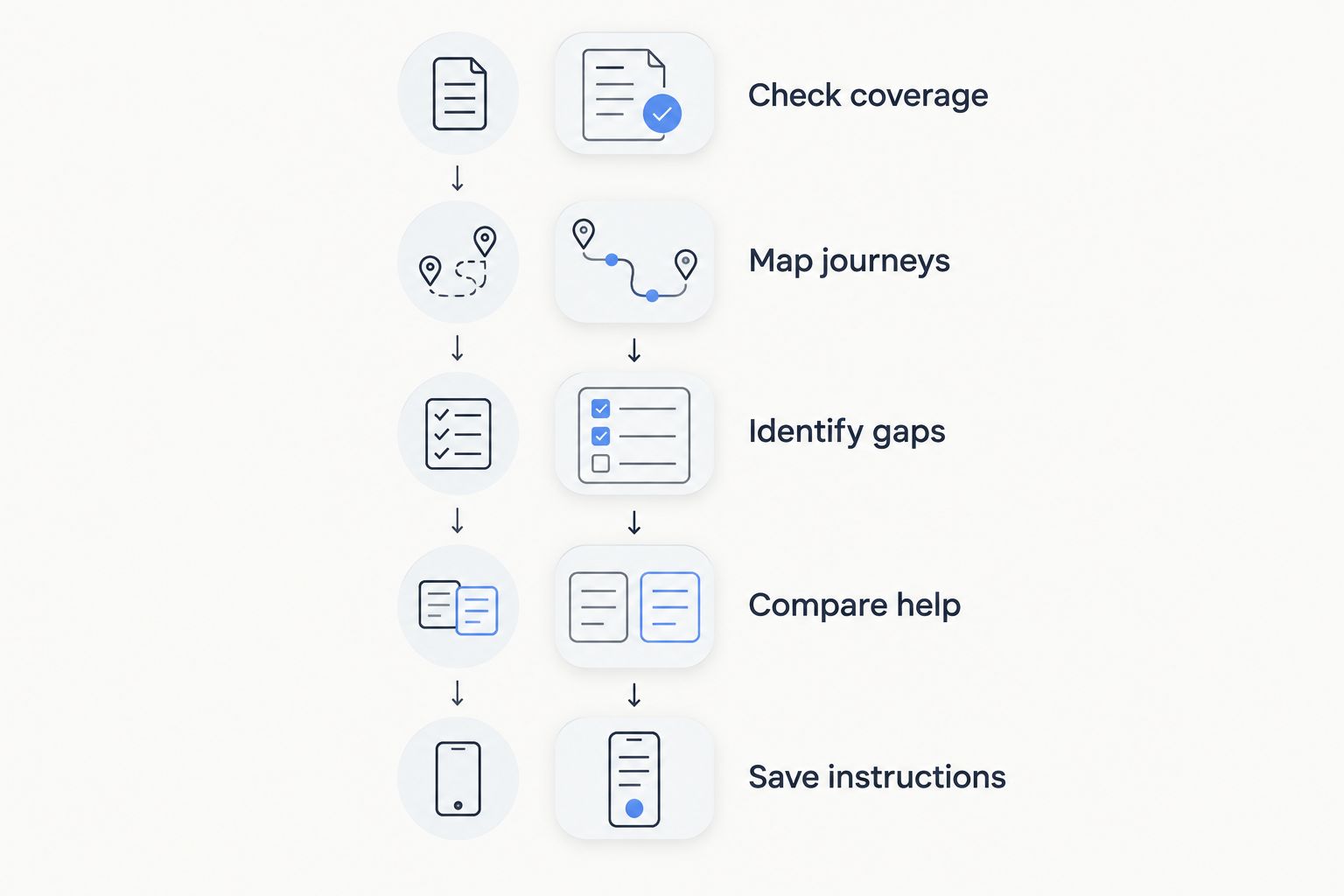
A useful check is whether another driver in your household could follow your instructions without asking you what the coverage means. If the contact details or eligibility rules are unclear, resolve that before relying on the arrangement.
Is roadside assistance worth it if your car is new?
A new car does not eliminate the need for a breakdown plan. Lockouts and tire damage are not limited to older vehicles, and vehicle age does not establish what assistance your documents include.
Check any roadside benefits associated with the vehicle before adding separate coverage. If those terms fit your driving needs, duplicating them does not improve your response.
Is roadside assistance worth it for occasional drivers?
Occasional driving does not remove the need to know whom to contact. Base your choice on the journeys you take and the help you can arrange, rather than driving frequency alone.
On-demand assistance is one option to assess alongside existing benefits. Roadally is best for drivers in Canada and the US seeking app-based access to verified local roadside providers.
Do you need roadside assistance if you can change a tire?
Being able to change a tire does not cover every roadside incident. A lockout, starting problem or mechanical fault requires a different response, and an unsafe stopping location can make a tire change inappropriate.
Do not attempt roadside work in a dangerous position. Follow local emergency guidance when the vehicle's location creates an immediate hazard, rather than treating an ordinary service request as the first step.
FAQ
Is roadside assistance worth it in 2026?
Roadside assistance is worth it in 2026 when it fills a genuine gap in your breakdown response. Check existing benefits, service areas and towing terms before adding another arrangement.
What's the best roadside assistance option for me?
The best option is the one that covers your vehicle, journeys and likely assistance needs without duplicating usable benefits. Compare existing coverage, separate ongoing coverage and on-demand help against those requirements.
Is on-demand roadside assistance better than a membership?
On-demand assistance suits an incident-specific request, while a membership provides an arrangement with terms established in advance. Choose according to your existing benefits and the gap you need to fill.
Does roadside assistance include car repairs?
Do not assume roadside assistance includes car repairs. Confirm which roadside tasks are included and what happens if the vehicle needs towing or workshop work.
Will Canadian roadside assistance cover me in the US?
Check the agreement's service-area and cross-border terms before relying on Canadian coverage in the US. A Canadian benefit does not by itself establish US eligibility.
What information should I have ready when requesting help?
Have your location, vehicle details and observable problem ready. Explain any access restrictions or immediate hazards without attempting an unsafe inspection.
What does Roadally provide?
Roadally provides an app-based platform connecting drivers in Canada and the US with verified local service providers. Emergency roadside services include jump starts, tire changes, towing and lockouts; scheduled mobile maintenance includes oil changes and detailing.
One last thing
Your most useful roadside preparation in 2026 is a request process you can actually follow. Save the contact instructions before a breakdown, and keep a copy that does not depend on finding the original agreement online.
Check the process again before a long trip or a change of vehicle. Knowing which help applies is more useful than remembering that you have some form of coverage.